The Rings of Power · A Viewer's Companion
Two brothers, one immortal and one not — and everybody who came after.
Thousands of years of Tolkien backstory arrive at once, in four languages, with names that all start with E. The trick is that almost every thread on this chart runs back to one pair of twins: Elrond stayed an Elf, Elros chose to be a Man and founded Númenor — so the Elf-lord and the kings of the sea are family. Silver cards are the Eldar, blue are Men (Númenor and the Southlands), gold are the Dwarves of Khazad-dûm, and ember is the enemy.
Spoiler-safe mode is on: death markers, secret-reveal labels and finale outcomes are hidden on this chart and in the notes below. Use the “Spoilers” button in the top bar to show everything again.
Five knots worth untying before Season 3
Everything confusing about this show comes from one of these five places.
Elrond's twin brother founded Númenor
At the end of the First Age the half-elven twins were made to choose: Elrond took immortality, Elros took a mortal life and became the first King of Númenor. That single choice is why an Elf-lord in Lindon and a queen on an island of sailors are, at a great distance, the same family — and why Númenóreans live for centuries but still die. Every blue card on the chart hangs off that one dotted line.
Three Elves, three completely different jobs
Gil-galad is the High King — politics. Celebrimbor is the master-smith of Eregion — the forge, and the rings. Galadriel is a soldier hunting the enemy who killed her brother Finrod. None of the three is related to the others, which is the single most common mix-up: the Elves share a look and a wardrobe, not a bloodline.
Halbrand is Sauron
The man Galadriel drags onto her raft in Season 1, who lets Númenor crown him “king of the Southlands” and helps Celebrimbor solve the forge, is the Dark Lord — revealed in the Season 1 finale. In Season 2 he comes back to Eregion wearing a second face, a golden emissary called Annatar, “the Lord of Gifts,” and talks Celebrimbor through making the rings for Dwarves and Men. One actor, one creature, three names.
Both Dwarf-kings are called Durin
Dwarves reuse the name down the generations, so Durin III (the grey-bearded king) and Durin IV (the son, married to Disa) are two people, not one. Their fight is the show's best domestic drama: the son wants to dig for mithril to save his Elf friend's people, the father won't risk the mountain. In Season 2 a Dwarven ring turns the father greedy, the digging wakes something ancient beneath the mine, and the crown passes in the worst possible way.
Númenor is a political thriller, not a fantasy
Míriel rules as Queen-Regent for her ailing father Tar-Palantir; her cousin Pharazôn is the chancellor who works the crowd. The island is split between the Faithful, who keep the old Elf-friendship (Elendil's family), and the King's Men, who want nothing to do with Elves. By the end of Season 2 Pharazôn holds the sceptre, the Faithful are arrested, and Elendil is running west with a sword called Narsil.
Adar is an Elf, and the orcs are his children
Not a monster who hates Elves — an Elf who was taken and twisted by Morgoth in the Elder Days, and who now wants a homeland where his “children” can live in the sun. He carved Mordor out of the Southlands for them at the end of Season 1, and long ago he killed Sauron's first body with Morgoth's crown, which is why the enemy of the enemy is not, here, a friend.
The name decoder
Sound-alike names, repeated names, and two people played by the same actor. Keep these apart:
Elrond vs. Elros vs. Eärendil
Elrond = on screen every week, herald of the High King. Elros = his twin, dead for centuries, seen only in a tapestry — the founder of Númenor. Eärendil = their father, the Mariner, who sailed west to beg the Valar for help and never came back; he is now the evening star.
Míriel vs. Pharazôn vs. Kemen
Míriel = the Queen-Regent with the sea-blue robes. Pharazôn = her cousin, the smiling chancellor with the crowd in his pocket. Kemen = Pharazôn's son, who does the things his father can't be seen doing. Tar-Palantir is Míriel's father and Pharazôn's uncle — that's the whole royal family.
Isildur vs. Anárion vs. Eärien vs. Valandil
Elendil has three children: Isildur (the restless one you follow), Anárion (mentioned, banished east, never cast) and Eärien (the daughter, apprenticed to the builders, drawn toward Pharazôn's politics). Valandil is not a son — he's Isildur's friend from the Sea Guard. In Tolkien's books Valandil is Isildur's son; the series gives the name to someone else entirely.
Durin III vs. Durin IV
Father and son, same name, one chart column. The king in the tall crown who says no is Durin III; the one with the arm tattoos who says yes is Durin IV, Elrond's oldest friend and Disa's husband.
Halbrand vs. Annatar vs. Sauron
All Charlie Vickers, all the same being. Halbrand = the Season 1 castaway. Annatar = the golden-haired “Lord of Gifts” of Season 2, the face he wears to get back into Celebrimbor's forge. Sauron = what he is. When someone on screen says “the Lord of Gifts,” that's the same man Galadriel pulled out of the sea.
Adar vs. the orcs vs. the Uruk
Adar is Elvish for “father” — it's a title the orcs gave him, not a name. He calls his soldiers Uruk rather than orcs, because “orc” is what their enemies call them. Note the recast: Joseph Mawle plays him in Season 1, Sam Hazeldine in Season 2.
Bronwyn vs. Arondir vs. Theo
Bronwyn = the Southlander healer. Arondir = the Silvan elf posted to watch her village, and in love with her — an Elf/mortal romance that mirrors Elrond's own ancestry. Theo = her son, the boy who found a broken sword-hilt under a barn floor and set most of Season 1 in motion.
The Stranger vs. the Dark Wizard
Two robed figures with unexplained power. The Stranger fell out of the sky in a meteor and is looked after by Harfoots. The Dark Wizard is the one already waiting for him in Rhûn, with followers and a plan. Season 2 finally gives the Stranger a name to grow into: Gandalf.
Not on the tree — but you can't follow the show without them
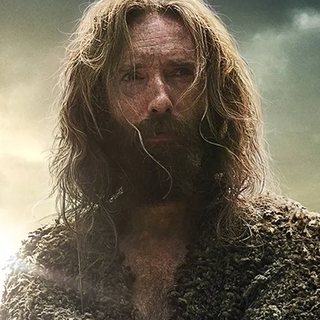
The Stranger
Arrived in a meteor, speaks in fragments, bends weather when he panics. He has no family on this chart at all — his whole story is finding out what he is. By the end of Season 2 he believes he will come to be known as Gandalf.
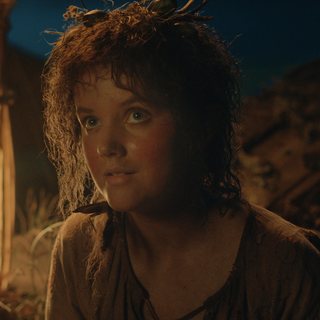
Elanor “Nori” Brandyfoot
The Harfoot girl who finds the Stranger and refuses to leave him. Harfoots are the ancestors of hobbits, which is why her half of the show feels like a different, gentler series.
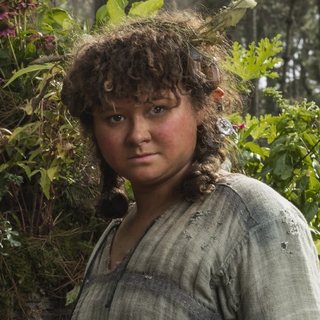
Poppy Proudfellow
Nori's best friend, and the one with the sense. She follows them into Rhûn in Season 2 rather than let Nori go alone.
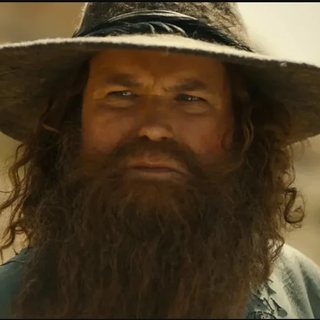
Tom Bombadil
Older than everyone on the chart and interested in none of their politics. He turns up in Season 2 to needle the Stranger toward a decision, in rhyme.
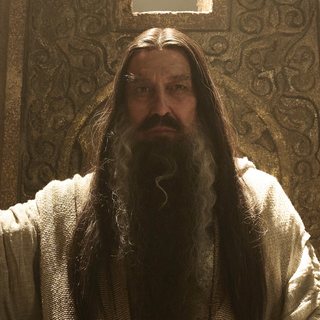
The Dark Wizard
A second wizard, already established in Rhûn with acolytes who obey him. He offers the Stranger a name and a purpose — on his own terms.
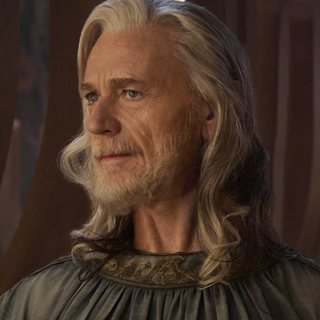
Círdan
The eldest Elf in Middle-earth, the shipwright of the Grey Havens. Elrond brings him the hardest question of Season 2 because he is the only one old enough to answer it.
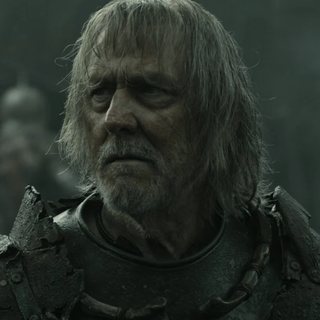
Waldreg
The Southlander tavern-keeper who has been waiting his whole life for the old darkness to come back, and swears to Adar the moment it does. The neighbour who was always going to collaborate.
A note on scope and sources: this chart covers The Lord of the Rings: The Rings of Power Seasons 1 and 2 — everything aired, through the Season 2 finale “Shadow and Flame” — so spoilers run to there and no further. Season 3 has not aired. Relationships, actor credits, deaths and Season 2 outcomes are checked against the-rings-of-power.fandom.com rather than memory, and cross-checked against the published episode summaries. Portraits are stills from that wiki, cropped and served from this site so nothing hotlinks anywhere; Celeborn, Eärendil and Anárion are shown as initials because the series has never put them on screen. Tolkien's books tell some of these stories differently — this chart follows the series.