The Borgias · A Viewer's Companion
The Pope has four children. This is his family tree — yes, the Pope's.
Rodrigo Borgia buys the papacy in the show's first hour and then runs the Vatican like a family firm — a son in the College of Cardinals, a son commanding the papal army, a daughter married off with every treaty. This chart keeps the firm straight: crimson borders are Borgia blood, marble is everyone who married, loved, or swore their way in, and purple is the cardinals and enemies circling them. The little crossed keys mark the men of the Church — starting with the father of the family, who is also the Holy Father.
Spoiler-safe mode is on: death markers, secret-reveal labels and finale outcomes are hidden on this chart and in the notes below. Use the “Spoilers” button in the top bar to show everything again.
Why the tree matters: the Church is the family business
Every scheme in the show runs through one of these five facts.
A Pope with children — how did that work?
Openly, is the answer. Cardinals of the 1490s took vows of celibacy and kept mistresses anyway; Rodrigo simply refuses to be embarrassed about it. Vanozza is the retired mistress who raised his four children; Giulia Farnese is the current one, living in the Vatican. The children are acknowledged, titled, and deployed — the family is his policy.
Cesare wanted the sword. Juan got it.
Rodrigo forces his cleverest son Cesare into a cardinal's robes and hands the papal army to his favorite, Juan — the exact wrong way round, and the show's slowest-burning fuse. Juan botches the siege of Forlì, murders Lucrezia's Paolo, and spirals into opium. In Season 2, Cesare walks him onto a bridge over the Tiber and settles it. The dashed crimson line is that bridge.
Lucrezia's weddings are treaties with rings
Marriage no. 1, Giovanni Sforza, buys Milanese support — he brutalizes her, so the Borgias annul it in open court on the grounds of his “impotence” (Rome's best comedy of the season). Marriage no. 2, Alfonso of Aragon, is the love match that Naples politics — and Cesare — destroy in the finale. In between: Paolo, the stable boy, and a very inconvenient baby.
Micheletto: family by loyalty
Sean Harris's assassin is on the chart because the show treats him as family in everything but blood — the man who does what Borgias need done and never asks for credit. He tries to kill Cesare in his first episode, fails, and swears to him instead. His dashed gold tie to Cesare is the most reliable bond on the whole page — until Season 3 breaks even that.
The Sforza problem — one name, three directions
The Sforzas of Milan are the family the Borgias can neither trust nor ignore. Giovanni marries Lucrezia, then betrays Rome. Cardinal Ascanio serves as Rodrigo's vice-chancellor while his cousins wage war on him. And Caterina, Countess of Forlì, becomes the show's great enemy — the matriarch who, dared to surrender lest her children be killed, declares from her walls that she can always make more.
Della Rovere plays the long game
Cardinal Giuliano Della Rovere loses the 1492 conclave to Rodrigo's bribes and spends the series trying to undo it — inviting a French army into Italy, surviving a Borgia poisoning, recruiting an assassin from a seminary. History let him win eventually; the show, canceled first, never got to say so.
The name decoder
Renaissance Italy ran on about six first names. Keep these apart:
Juan · Giovanni · Giovanni
The show's cruelest trick: Juan is just Spanish for Giovanni, so there are effectively three. Juan Borgia = the doomed soldier brother. Giovanni Sforza = Lucrezia's loathed first husband. Giovanni Borgia = Lucrezia's baby. One name, a murderer, his victim's employer, and an infant.
Vanozza vs. Giulia
The two women beside the Pope. Vanozza (Joanne Whalley) = the mistress of his youth, mother of all four children, dignity intact. Giulia (Lotte Verbeek) = the young mistress of his papacy. They eventually become allies, which nobody in Rome saw coming.
Cesare vs. Micheletto
Both kill people; division of labor. Cesare decides — and handles family matters personally (Juan, Giovanni Sforza, Alfonso). Micheletto executes everything else, with rope and knife and total calm.
The two Alfonsos
Alfonso of Aragon = Lucrezia's gentle second husband, dead in the finale. Alfonso of Naples = Sancia's half-brother, briefly the King of Naples during the French invasion. Both Neapolitan royalty, which is exactly why the names blur.
Sforza, Sforza & Sforza
All cousins from Milan's ruling clan. Giovanni = husband no. 1 (Pesaro). Ascanio = the cardinal and vice-chancellor inside the Vatican. Caterina = the warrior countess of Forlì. Same house, three completely different threats.
Rodrigo vs. Alexander
Same man. Rodrigo Borgia is his name; Alexander VI is his papal title. Family calls him Rodrigo (or “Father”, confusingly accurate); everyone else says Holy Father.
Micheletto vs. Rufio
Each side keeps an assassin. Micheletto (Sean Harris) works for Cesare. Rufio (Thure Lindhardt) arrives in Season 3 working for Caterina Sforza. When they finally intersect, it costs Micheletto everything.
Joffre — or Gioffre?
Spellings vary; the show credits Joffre. The youngest Borgia is married to Sancia of Naples to seal an alliance, watches his brother Juan romance his own wife, and then quietly vanishes from the story after Season 1. Even the show forgets him — you're allowed to as well.
Not family — but always in the room
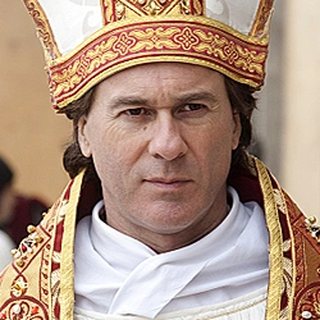
Ascanio Sforza
Cardinal and vice-chancellor — the Sforza inside the Vatican, forever choosing between his pope and his cousins, and surviving every choice.
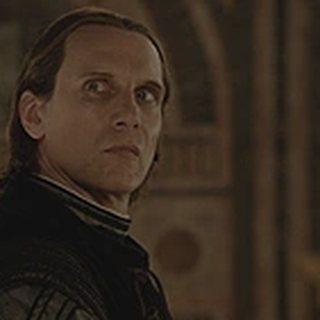
Niccolò Machiavelli
Florence's silky ambassador and Cesare's occasional advisor. Yes, that Machiavelli — take notes on who he's watching; he certainly is.

King Charles VIII †
The French king whose cannons march the length of Italy in Season 1 — invited in by Della Rovere, talked back out by a Borgia charm offensive.
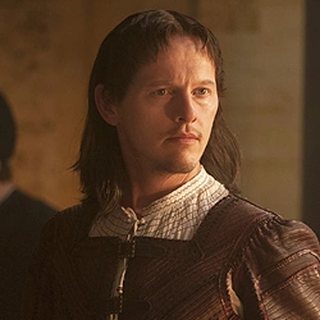
Rufio
Caterina Sforza's assassin, arriving in Season 3 as Micheletto's dark mirror — the blade on the other side of the board.
Chart covers the complete series — all three seasons (2011–2013); every † above happens on screen. Showtime ended the show after Season 3 with the story visibly mid-sentence, and the planned two-hour finale was written but never filmed — so Cesare never gets his ending, and neither, famously, do we. Portraits are stills from The Borgias wiki, cropped and served from this site so nothing hotlinks or rots.