Mad Men · A Viewer's Companion
Two names, three families, one man in the gray flannel suit.
The hardest thing to track in Mad Men isn't the office politics — it's that the main character is two people. This chart lays out all three of Don Draper's families: red is the Whitman truth (the farm family he fled, and the dead officer whose name he wears), amber is the Draper households he built in the suburbs, and steel blue is the family he actually comes home to — the agency.
Spoiler-safe mode is on: death markers, secret-reveal labels and finale outcomes are hidden on this chart and in the notes below. Use the “Spoilers” button in the top bar to show everything again.
Why one man needs three families' worth of chart
Every slow-burn reveal in the show is already drawn above. Here is the shape of it.
There are two Don Drapers
In Korea, 1950, poor farm kid Dick Whitman is the sole witness when his lieutenant, the real Don Draper, is killed. Dick swaps their dog tags, lets "Dick Whitman" be shipped home in a coffin, and builds a gleaming new life on a dead man's name. The show tells you this in Season 1 — the suspense is never the secret itself, it's who finds out.
Who finds out, and what it costs
Pete digs it up in Season 1 and tries blackmail — Bert Cooper shrugs, "Who cares?" His brother Adam finds him, is paid $5,000 to disappear, and hangs himself. Betty unlocks the desk drawer in Season 3, and the marriage follows Kennedy into the grave. By the time Don blurts the truth to a roomful of Hershey executives in Season 6, the secret has cost more than it ever protected.
Three women were Mrs. Don Draper
Anna was married to the real Don — and quietly annulled her marriage to the impostor so he could wed Betty, the Ossining model with three children. After the divorce Betty becomes Mrs. Henry Francis, and Don marries his secretary Megan, who wants a stage more than a suburb. Only Anna ever knew the whole man.
The agency keeps changing its name
It's the same people the whole time. Sterling Cooper (founded 1923 by Bert and Roger's father) is sold to the British, so the partners steal their own clients and bolt to form SCDP in the Season 3 finale; a merger later makes it SC&P, and advertising giant McCann Erickson finally swallows them whole. When a character's business card changes, their family doesn't.
Two children the office never discusses
Peggy has Pete's baby in the Season 1 finale — she gives him up, tells Pete a year later ("I had your baby, and I gave it away"), and the show almost never speaks of it again. Joan raises Kevin as her husband Greg's son, but he is Roger's — conceived long after their affair was supposed to be over. Both secrets sit on the chart as dashed red lines.
The name decoder
The show hands several characters two names each — and hands one name to two characters. Keep these straight:
Dick Whitman vs. Don Draper vs. Lt. Don Draper
Three names, two men. Dick Whitman is who the hero was born; Don Draper is the dead officer whose name he took — and whose widow, Anna, he was even legally married to until she quietly annulled it. When a stranger calls him "Dick," pay attention.
Betty Draper vs. Betty Francis
Same woman, one wedding apart. January Jones is Betty Draper in the Ossining years, then Betty Francis once she marries Henry in Season 4. The kids stay Drapers either way.
Two Genes
Gene Hofstadt is Betty's crotchety father who moves in during Season 3 and dies buying peaches; baby Gene Draper is her third child, born that same spring and named in his honor. One tree, one name, two generations.
Joan Holloway vs. Joan Harris
Same redhead. Holloway is her own name; Harris comes from marrying Dr. Greg — and after the divorce, her finale company stitches both together: Holloway Harris.
Megan Calvet vs. Megan Draper
The French-Canadian receptionist is born Calvet and becomes the second Mrs. Draper after the Season 4 finale's whirlwind proposal. Her mother Marie matters later — ask Roger.
Roger Sterling vs. Roger Sterling
The name on the building is his father's. Roger Sterling Sr. co-founded the agency with Bert Cooper in 1923; the silver fox we follow is Junior, who inherited the nameplate and the accounts.
One Bobby, four faces
Bobby Draper was played by four different actors across seven seasons — if the middle Draper child looks unfamiliar again, that's not your memory failing. It's a running joke even the cast acknowledged.
Not family — but always in the office

Ken Cosgrove
The accounts man who stays decent — and secretly publishes science fiction under a pen name. Loses an eye to a client's shotgun and keeps working anyway.
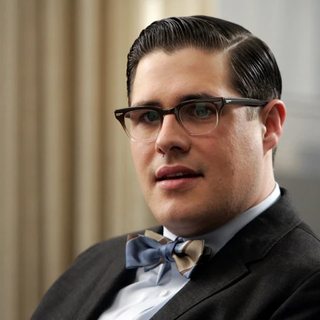
Harry Crane
Invented the agency's television department when nobody wanted one — then spent a decade reminding everyone, gracelessly.

Stan Rizzo
The bearded art director and Peggy's phone-call confidant — until the finale finally lets him say what the calls were really about.

Ted Chaough
Don's rival at a smaller shop who merges his agency into SC&P — then falls for Peggy and flees to California to escape it.
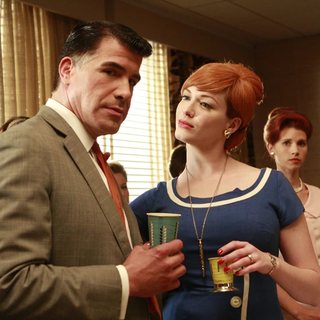
Sal Romano
The closeted art director of the early seasons — fired in Season 3 for refusing a Lucky Strike heir's advances, one of the show's quietest injustices.
A note on the portraits: these are the characters as they appear on screen — stills from the Mad Men wiki, cropped and served from this site so nothing loads from anyone else's servers. Tammy and Peggy's unnamed baby were never given promotional stills, so they keep monograms. Facts checked against the Mad Men wiki. Chart reflects the complete series, 1960–1970 — all seven seasons, spoilers to the finale.