The Crown · A Viewer's Companion
Four generations, two Elizabeths, and a brand-new face every two seasons. Here's who's actually who.
The Crown confuses people twice over: half the family shares the same four names, and every single character is recast every two seasons — so the Queen you left in 1963 returns in 1964 wearing Olivia Colman's face. This chart pins everyone down. Crimson borders are the direct line of succession (king to queen to king-in-waiting), blue borders are Windsors off the direct line — the siblings and spares — and pewter borders are the married-in: Philip's side, Diana, Camilla, and the men who loved Margaret. Every card lists all the actors who played the part.
Spoiler-safe mode is on: death markers, secret-reveal labels and finale outcomes are hidden on this chart and in the notes below. Use the “Spoilers” button in the top bar to show everything again.
Four things that explain the whole series
Every plot in six seasons grows out of these — one abdication, one imported prince, one blocked romance, and a casting director’s calendar.
One resignation created everybody’s problems
In 1936 Edward VIII gave up the throne to marry Wallis Simpson, a twice-divorced American the Church would not accept. His stammering younger brother Bertie was forced on as George VI — the strain, the show argues, helped kill him — and Bertie’s ten-year-old daughter Elizabeth became heir overnight. Every rule the family later enforces on Margaret, Charles, and Diana is enforced because of the abdication: never again would private desire outrank the Crown.
Philip isn’t a commoner — he’s the other royal family
Philip was born a prince of Greece and Denmark and is, like Elizabeth, a great-great-grandchild of Queen Victoria — they’re distant cousins. His mother Princess Alice (deaf from birth, later a nun) steals Season 3; his uncle “Dickie” Mountbatten haunts all four decades, mentoring first Philip and then Charles until the IRA kills him in Season 4. The surname row of Seasons 1–2 — Mountbatten vs. Windsor — is about whether Philip’s family name would swallow the dynasty’s.
Why the Queen has three faces
The show swaps its entire cast every two seasons so the characters can age forty years. Seasons 1–2: Claire Foy, Matt Smith, Vanessa Kirby. Seasons 3–4: Olivia Colman, Tobias Menzies, Helena Bonham Carter. Seasons 5–6: Imelda Staunton, Jonathan Pryce, Lesley Manville. Nobody died, nobody was replaced mid-story — if a face looks new, check the actor line on the card above: it’s the same person, older.
Townsend vs. Snowdon
First came Peter Townsend — decorated RAF hero, her father’s equerry, and divorced, which in 1955 made marriage unthinkable; the Palace and Church made Margaret choose, and she gave him up. Then came Tony Armstrong-Jones, the louche society photographer she married in 1960 — a union of two sharp tongues that curdled into the family’s first modern divorce in 1978. The show frames her whole life through the man she was refused.
Diana, Camilla, and the longest wait
Charles met Camilla around 1970 — before Diana was even a teenager — and the family maneuvered him away from her. In 1981 he married Diana Spencer, nineteen years old and instantly more beloved than the institution itself. The “War of the Waleses” fills Season 5, the divorce comes in 1996, Diana dies in Paris in 1997 — and the series ends where it began, with a controversial wedding: Charles and Camilla, 2005.
The name decoder
The Windsors recycle four names and a dozen titles. Keep these straight and the show gets much easier:
Elizabeth vs. Elizabeth
Two at once, for five decades. Elizabeth II is the Queen; her mother, George VI’s widow, is also named Elizabeth — always called “the Queen Mother” so the palace staff don’t lose their minds. When George VI says “Elizabeth,” he usually means his wife; “Lilibet” is the daughter.
Edward vs. Edward vs. “David”
Edward VIII — the abdicator — was called David by the family, which is what everyone on screen calls him. The other Edward is the Queen’s fourth child, born in Season 2’s era. Different men, sixty years apart.
“Bertie” = George VI
The stammering king’s real name was Albert. He took the regnal name George to signal continuity after his brother’s abdication — so “Bertie,” “George VI,” and “Papa” are all Jared Harris.
Mountbatten the man vs. Mountbatten the name
Lord Mountbatten (“Dickie”) is a person — Philip’s uncle. Mountbatten is also the anglicized family name (from the German Battenberg) that Philip fought to give his own children — the great surname row of Seasons 1–2, settled years later as “Mountbatten-Windsor.”
Peter vs. Tony
Margaret’s two men, one per era. Peter Townsend — the RAF officer of Seasons 1–2 (and a wistful S5 reunion, played by Timothy Dalton). Tony Armstrong-Jones, Lord Snowdon — the husband, Seasons 2–4.
The three grandmothers in black
Easily blurred: Queen Mary — Eileen Atkins, Season 1, the terrifying widow of George V. The Queen Mother — around for all six seasons. Princess Alice — Philip’s mother, the chain-smoking nun of Season 3. Grandmother, grandmother, and other grandmother.
Which actress is which era
Quick calibration for the Queen: Foy = 1947–1963 (coronation, Townsend affair). Colman = 1964–1990 (Aberfan, moon landing, Diana’s wedding). Staunton = 1991–2005 (the “annus horribilis,” Diana’s death, Charles’s remarriage).
“The heir and the spare”
The phrase echoes down the tree: Margaret was Elizabeth’s spare, and Harry is William’s — the show draws the parallel explicitly in Season 6, with the same mix of privilege and pointlessness.
Not family — but always in the room
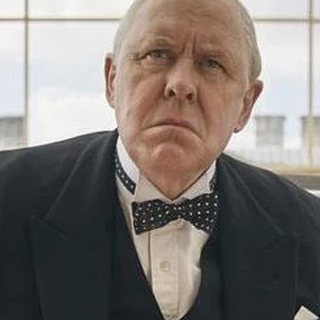
Winston Churchill
Her first and favorite Prime Minister — mentor, obstacle, and grandfather figure of Seasons 1–2. Nine more PMs follow him through the decades, but only Winston gets the Queen’s tears.
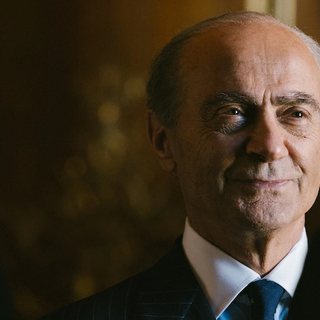
Mohamed Al-Fayed
The Harrods owner who spent a fortune courting royal acceptance — buying the Windsors’ old Paris villa, even employing Edward VIII’s former valet — and pushed his son toward Diana.
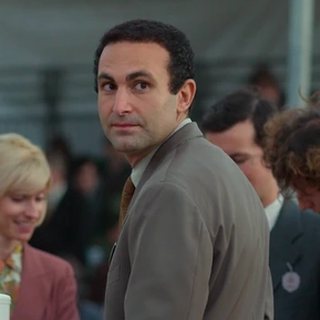
Dodi Fayed †
Film producer and Diana’s final companion — dead beside her in the Paris crash that opens Season 6.
Scope and sources: this chart covers the Windsors as dramatized in The Crown, all six seasons — from the 1947 wedding to the 2005 Charles–Camilla wedding — so spoilers run to the very end. The † marks deaths the series depicts. These are real people, but every portrait here shows the actor in the role (stills from the show’s fan wiki, cropped and self-hosted), not news photography of the royals themselves; relationships shown are as the show presents them. Minor spouses (Mark Phillips, Sarah Ferguson, Sophie Rhys-Jones) and the parade of Prime Ministers are left off to keep the family legible.